
Back in the late 1990s, I made my way across the US, from New York to LA.
From there I flew to the Cook Islands, then on to Australia. I had a working holiday visa, and I mixed in plenty of backpacking too. I landed in Sydney and stayed there for a month or two. My girlfriend at the time and I bought a car between us. We set off and worked on farms along the way.
The car was dual fuel. It ran on both petrol and natural gas. Before we left Sydney, we took it to a garage. This garage specialised in exactly this kind of vehicle. Backpackers and travellers buy these cars secondhand. Most of them haven’t looked after the cars properly.
The garage gave us a long list of repairs. They said the car needed all the repairs. I’m not a car person. I had no idea if someone was taking us for a ride. I couldn’t tell if the work was genuinely necessary. We paid for some of it and got back on the road.
At some point, we broke up. I carried on travelling by myself in the same car.
Arriving in Nimbin after dark
By then the car was already giving me trouble. It broke down more than once. I had flat tyres too. It stalled repeatedly. None of that happened in Nimbin itself. It had all started before I got there. But it’s worth knowing the car was already unreliable by this point in the story.
I’d vaguely heard of Nimbin before. It’s Australia’s best known hippie town. Many people see it as the unofficial home of the country’s cannabis culture. I didn’t know much more about it than that.
I arrived at night and found a car park towards the back of town. Then I pulled the curtains across the windows and tried to get some sleep. The car was fairly big in the back. It was big enough to sleep in, so that’s what I did.
What the morning showed me
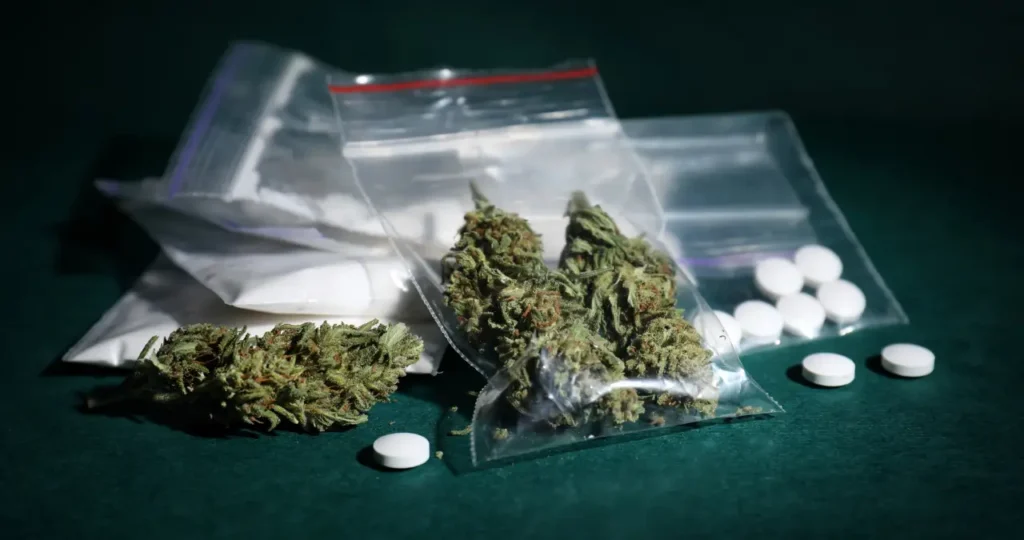
I woke up and walked into the main part of town. It was around eight in the morning. The town was completely empty. Syringes lay on the ground everywhere. That’s what struck me straight away. A few people were sleeping rough. They were still asleep as I passed. A handful of others were up and about. They just looked spaced out, wandering without any real direction. It didn’t feel like a real place. It felt like a scene from a film.
Nimbin sits in genuinely beautiful countryside. Hills and rainforest surround the town. That contrast made everything worse, not better. It’s a postcard setting. But needles cover the pavement, and people wander around in a haze underneath it all.
I didn’t get long to take it in. The car wouldn’t start. I had to call a mechanic out. Between that and everything else, I was only there for a few hours in total.
Cheap is exactly what makes it dangerous
I think about that car park more than most other places I stayed. That’s not because of the scenery. It’s because I saw what addiction looks like up close. It wrecks people quietly, while the hills carry on being beautiful around them.
Nobody in that town set out to end up there. Addiction doesn’t arrive as ruin. It arrives as relief. A hit takes the edge off. Then you need another one just to feel normal again. Eventually the person disappears into it completely. They never make one decision that looks like the big one.
I see a version of the same pattern in the online business world. The price tag is exactly what lets it happen. A course costs seven dollars. A piece of software costs a few dollars a month. Another cheap system promises to be the one that finally makes it click. It’s cheap enough that nobody stops to think about it. That’s the whole trick. People scrutinise a hundred pound purchase. They don’t scrutinise a seven dollar one. So nobody ever asks whether it’s actually going to change anything.

Buy enough of those, and two things become true. You’ve spent a genuinely large amount of money. You’d never have agreed to hand over that much in one go. And you’re no further along than when you started. A cheap fix was never going to do the real work. Finishing something and applying it does that work instead. You end up with a hard drive full of unopened courses. You have no clearer idea what to do than you had a year ago.
The people selling it know exactly what they’re doing
If the buyer is the addict, the sellers are the dealers. They know exactly what they’re doing and are aware that a seven dollar price gets people to buy without thinking.
They know most buyers won’t finish the course, let alone act on it but sell the fix anyway. Someone chasing a feeling, not a result, always comes back for more. That repeat buyer is worth more to them than a satisfied customer. A satisfied customer gets what they need and stops looking.
There’s no real accountability anywhere in it. Nobody checks whether these products deliver on their promises. Nobody tracks how often the same person buys the same fix in a different wrapper. The authorities never catch anyone, because none of it is illegal. The sellers design it to slip past unnoticed.

Then there are the networks these products sell through. They take a cut of every transaction, they never ask whether what’s moving through them is worth the money. And they don’t need to care. Volume decides their earnings, not quality.
A middleman profits from every deal, whatever the product. More products sold means more money for them. It doesn’t matter if a single customer ends up better off.
That’s the trap in one sentence. No single purchase ruins anyone. Nobody ever thinks one purchase is worth stopping for. Everyone further up the chain earns money regardless. That’s exactly why the pile never stops growing. The person underneath it never moves forward.
If that’s you, don’t look for a better seven dollar course. Pick one thing you’ve already bought.
Finish it and then use it.