
The overnight camping trip near Ayers Rock came after Nimbin, once I’d made my way from Sydney down to Adelaide and then on to Alice Springs, each leg of the journey eating up a full day or two on the bus. I stayed in Alice Springs for four or five days, and one of the excursions I booked was an overnight trip out to Kings Canyon and Ayers Rock.
Camping under more stars than I’d ever seen
Fifteen strangers piled into a minibus together, friendly enough despite nobody knowing anybody else. We drove out into the middle of the outback and camped for the night under a sky I’d never seen anything close to before, completely black and completely clear, stars covering every inch of it.
The one downside was the toilet block. It had lights, which meant it also had every insect for miles around packed inside it, and more than once I found a frog sitting in the bowl. It’s the kind of detail you remember as vividly as the stars, oddly enough.
The climb
We were up before dawn and driven straight to the base of Ayers Rock, where we were told we could start climbing. A handful of us wanted to get to the top before the sun did, so we pushed hard from the first step, while others in the group were happy to take their time and follow at whatever pace suited them.

The first stretch nearly broke me. It was steep enough that a chain had been fixed into the rock to help pull yourself up, and within a few minutes my legs were burning and my breath was coming in short, ragged pulls that didn’t feel like they belonged to someone who thought he was in decent shape.
Once that section passed, the climb eased into a rhythm of dips and rises, and the pace turned into something close to a jog, sweat soaking through my shirt despite the cool of the early morning air. We reached the top in around forty minutes, chests heaving, nobody saying much beyond the occasional word between breaths.
What was waiting at the top
The effort stopped mattering the second the light started to change. Standing at the top in that last stretch of darkness, waiting, felt like being handed a secret the rest of the group down below hadn’t earned yet. As the sun came up, the rock’s own shadow stretched out for miles across the flat outback beneath us, a dark shape pointing away from the light like a sundial the size of a small country.
Nobody spoke. The whole climb, the burning legs and the chain and the ragged breathing, folded into a couple of minutes of standing completely still, watching a shadow the size of a mountain slowly shorten across the desert floor.
Kings Canyon, a hidden pool, and heat that hit like a wall
Coming back down, we headed to Kings Canyon and spent the rest of the morning hiking through it, the terrain a total shift from the flat red plain around Ayers Rock, all cliffs and gorges cut into the rock over millions of years. Deep inside one of the canyon walls we found a natural pool, cool water sitting in shade that felt almost unreal after the heat of the walk in.

The real shock came on the drive back, when the temperature outside hit 47 degrees and the driver actually pulled the minibus over so everyone could get out and stand in it for a minute. I’d never felt heat like it before, the kind that presses down on your skin the instant you step outside, dry and total, nothing like anything Britain had ever prepared me for.
When Google took my traffic and I kept climbing anyway
A year and a half or so ago, one of Google’s core updates hit my Japan travel site hard. It wasn’t a gradual decline I could adjust to gently. Traffic that had been building steadily for years fell off a cliff almost overnight, down to a couple of clicks a day, and it stayed there for months. Google was quite open at the time that these updates were meant to reward small independent sites doing genuine work, but knowing that didn’t put a single visitor back on my pages while I waited to see if it would ever apply to me.
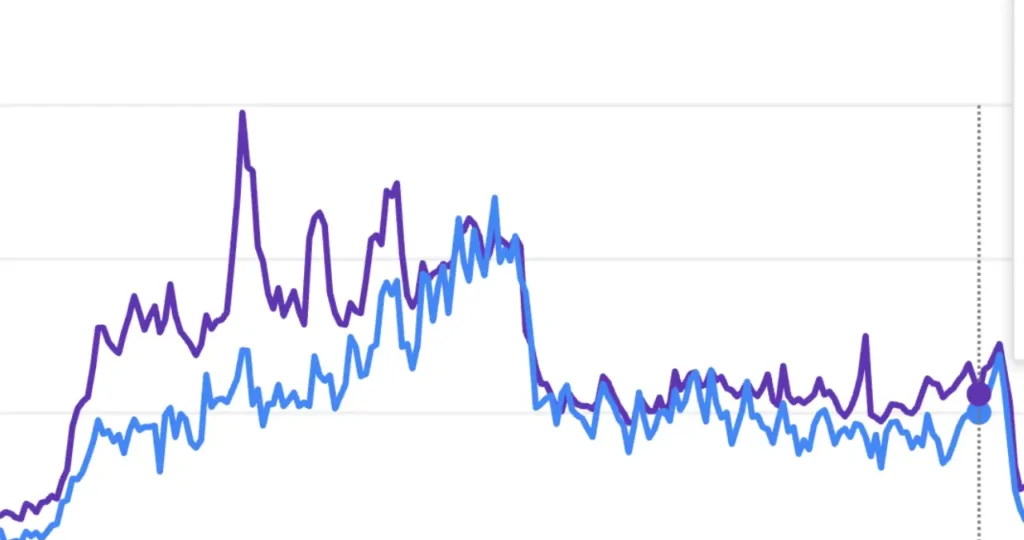
Plenty of site owners in that position do the equivalent of taking Ayers Rock at an easy pace, publishing less, waiting to see what happens, treating the drop as proof there’s no point pushing until the algorithm decides to be kind again. I did the opposite.
I kept publishing the best content I could manage, and at the same time I pushed hard on the channels that didn’t depend on Google’s mood at all, pinning to Pinterest two or three times a day and building out my own Facebook page from nothing.
That page went from zero to fifty thousand followers, built through cheap ads, a fair amount of trial and error, and the occasional post that caught fire and pulled a thousand clicks in a single day. None of it happened quickly, and none of it happened because conditions improved.
It happened because I kept climbing while the search traffic sat at zero, and eventually that page became my biggest source of traffic, bigger than search ever was even before the update hit.
So, my Google core update recovery was by stopping caring about the search engines.
Why the ones who pushed saw something the others didn’t
Everyone on that minibus had the exact same opportunity that morning. The same rock, the same chain, the same sunrise sitting there waiting for whoever showed up in time to see it. The difference came down to who was willing to burn their legs on that first steep stretch before their body had properly woken up, and who preferred to take the climb at an easier pace and arrive once most of the show was already over.
That same split played out with my own traffic collapse, and it plays out with most setbacks people face in business. The conditions that knocked you down rarely improve just because you waited.
The people who end up seeing the view, whether that’s a sunrise over the outback or a traffic source big enough to replace the one that vanished, are usually the ones who kept pushing while everyone else decided it wasn’t worth the effort until things got easier.